10 Customer Retention Strategies That Work

Acquiring a new customer can cost five times more than retaining an existing one. In today's competitive market, focusing on your current customer base isn't just a good idea; it's essential for sustainable growth. But what truly works? Generic advice often falls short, and businesses need proven methods that create lasting connections. Effective customer retention strategies are the bedrock of a resilient business, turning one-time buyers into loyal advocates.
This article cuts through the noise to deliver 10 powerful, actionable tactics that drive real results. We will move beyond theory and provide step-by-step implementation guidance for each strategy, from personalizing the customer journey to building a thriving brand community. You will find real-world examples from industry leaders and practical tips you can use immediately to improve how you engage with your customers.
To build a brand that lasts, understanding these fundamentals is key. For a foundational overview, exploring this guide on Mastering Customer Retention and Loyalty provides excellent context on building an e-commerce brand that endures.
In the sections that follow, we will cover everything from proactive customer support and feedback loops to leveraging predictive analytics for churn prevention. Get ready to transform your customer relationships and build a loyal base that fuels your business for years to come.
1. Personalized Customer Experience
A personalized customer experience is one of the most effective customer retention strategies because it moves beyond one-size-fits-all interactions. It involves using customer data, such as browsing history, past purchases, and expressed preferences, to create tailored interactions across every touchpoint. This approach makes customers feel seen, understood, and valued, transforming a transactional relationship into a loyal one.
When a customer receives an offer for a product they were just considering or content that perfectly matches their interests, it demonstrates that you are paying attention. This level of detail builds trust and significantly reduces the likelihood of them switching to a competitor.
How to Implement a Personalized Experience
Getting started with personalization doesn't require a massive budget. You can begin with simple, high-impact tactics and scale up as you gather more data and resources.
- Start with Segmentation: Group customers based on shared characteristics like demographics, purchase history, or location. For example, a clothing retailer can send an email about a new line of winter coats exclusively to customers living in colder climates.
- Leverage Behavioral Data: Use website or app activity to trigger personalized communications. If a customer abandons their shopping cart, send a follow-up email with a small discount or a reminder of the items they left behind.
- Gather Explicit Preferences: Directly ask customers what they want. Use preference centers where they can select the types of content they want to receive or how often they want to hear from you.
Key Insight: Personalization works because it shifts the focus from the company's goals to the customer's needs. It shows you value their time and attention by only offering what is relevant to them.
The impact of a well-executed personalization strategy is clear and measurable. The following infographic highlights key data points that demonstrate its power.
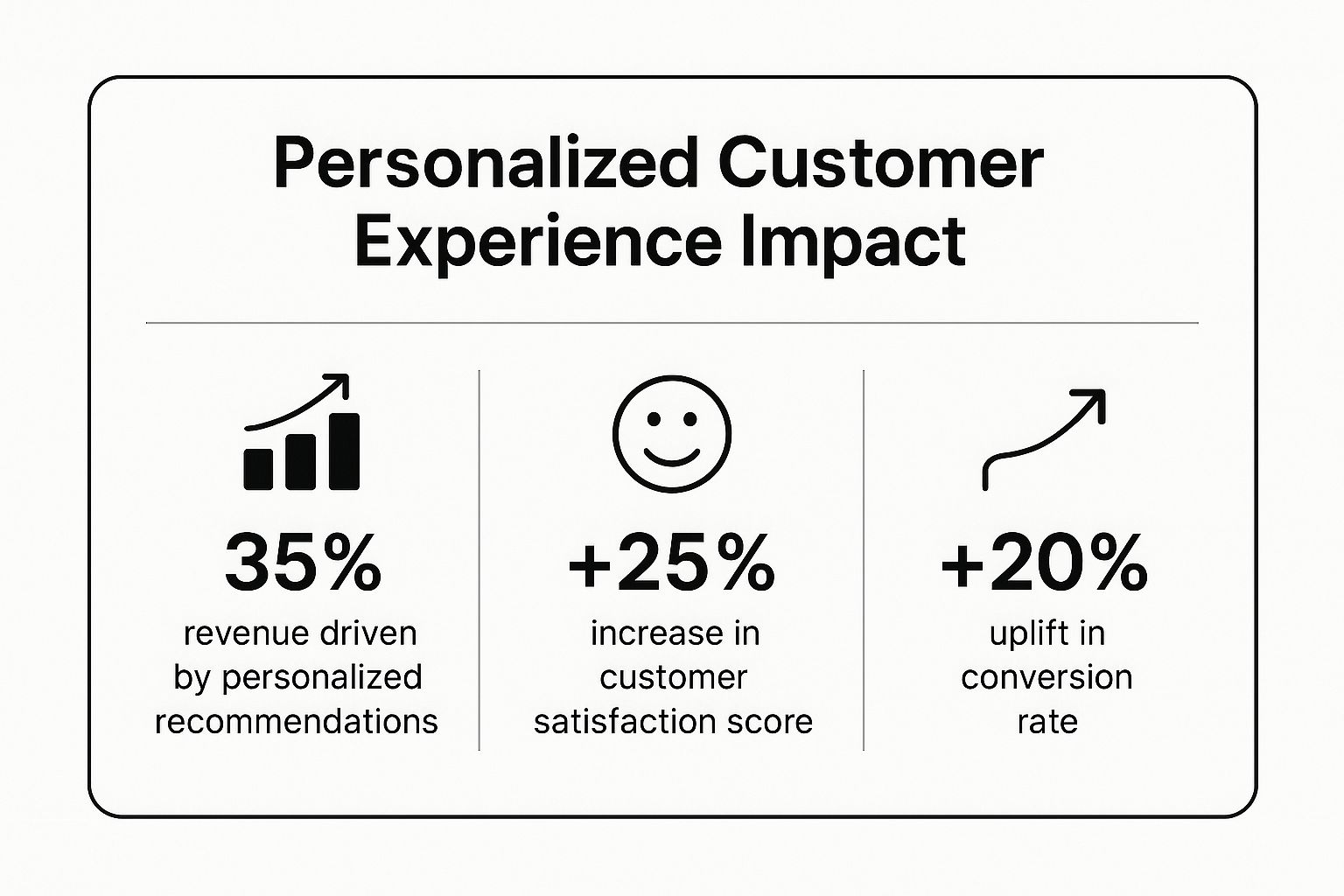
This data shows that personalization not only boosts revenue but also directly improves customer satisfaction and conversion rates, creating a powerful cycle of loyalty and growth. A customer who feels their experience is tailored to them is more likely to be satisfied, complete a purchase, and return in the future.
2. Loyalty Programs and Rewards
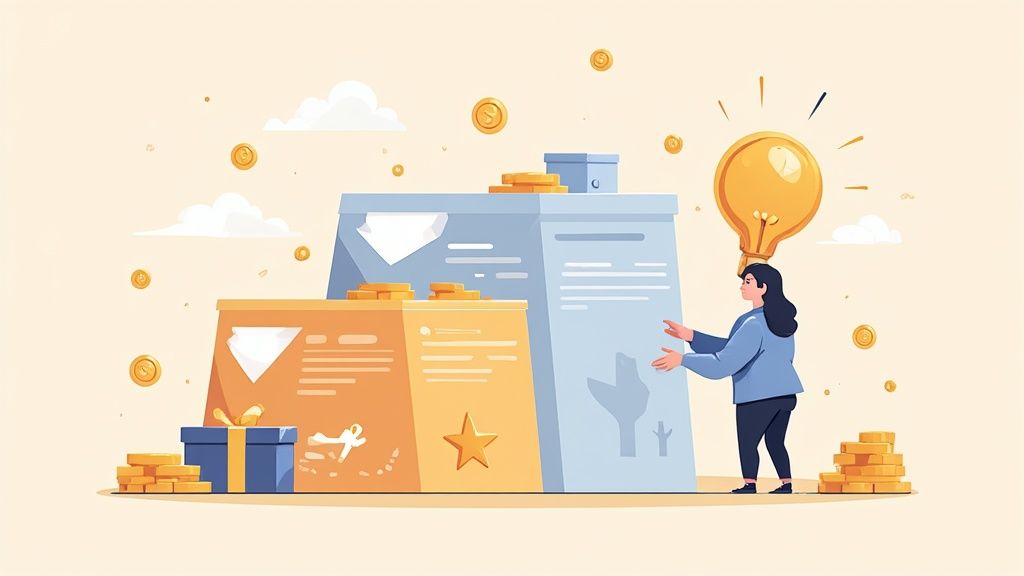
Loyalty programs are structured marketing strategies designed to reward customers for their repeat business and ongoing engagement. These programs create powerful economic and psychological incentives for customers to stick with a brand, offering benefits like points, discounts, or exclusive access. By rewarding desired behaviors, you make customers feel appreciated and give them a tangible reason to choose you over competitors.
A well-designed program not only encourages repeat purchases but also fosters an emotional connection. For example, Sephora's Beauty Insider program drives an estimated 80% of its transactions by offering a tiered system that makes members feel like valued insiders. Similarly, Starbucks Rewards has cultivated a massive community of over 24 million active members who contribute to half of the company's revenue.
How to Implement a Loyalty Program
Creating an effective loyalty program involves more than just handing out points. It requires a strategic approach that aligns with both your business goals and your customers' desires.
- Make Rewards Attainable and Valuable: The rewards must be desirable to your target audience and realistically achievable. If perks are too difficult to earn, customers will quickly lose interest.
- Use Data to Personalize Offers: Analyze customer purchase data to tailor rewards and communications. A loyalty program is a great tool for gathering insights into customer behavior, which can then be used to refine your offerings.
- Integrate Across All Touchpoints: Ensure your loyalty program is seamless across your website, mobile app, and in-store experiences. A customer should be able to earn and redeem rewards no matter how they interact with your brand.
- Regularly Refresh the Program: Keep the program exciting by introducing new benefits, limited-time offers, or exclusive experiences. Stagnant programs can become invisible to long-term customers.
Key Insight: The most successful loyalty programs go beyond transactional benefits. They create a sense of community and exclusivity, making customers feel like they are part of something special, which is a powerful driver of long-term retention.
By turning transactions into relationships, loyalty programs serve as one of the most reliable customer retention strategies. They provide a clear framework for building and maintaining customer devotion, creating a predictable revenue stream from your most valuable audience segment.
3. Proactive Customer Support
Proactive customer support is one of the most powerful customer retention strategies because it shifts the service model from reactive to preventive. Instead of waiting for customers to report problems, this approach anticipates their needs and addresses potential issues before they escalate. By monitoring customer behavior and identifying early warning signs, you can provide timely solutions that create a seamless and frustration-free experience.
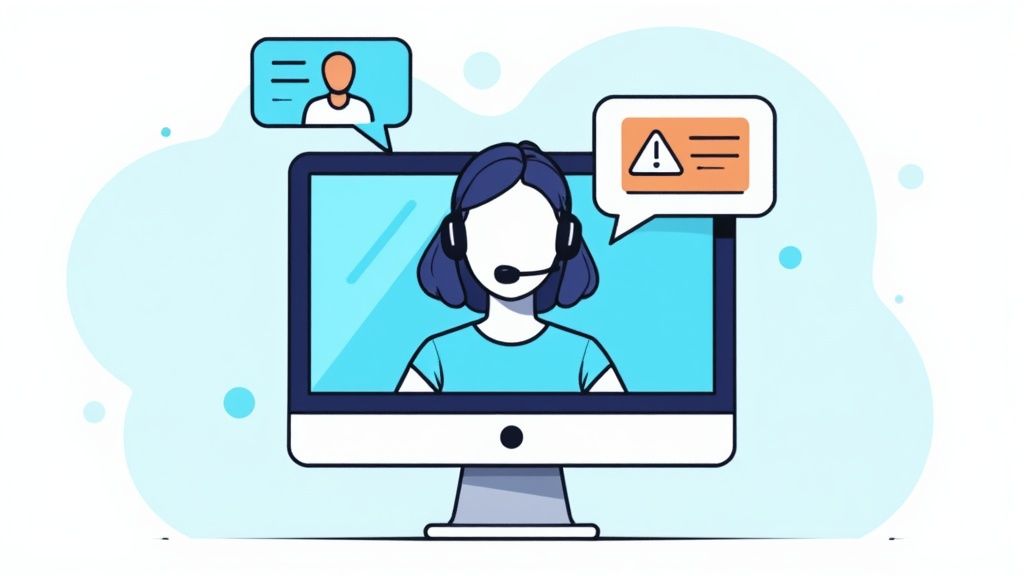
When you reach out to a customer with a helpful tip just as they encounter a tricky feature, or solve a technical glitch before they even notice it, you demonstrate a deep commitment to their success. For example, HubSpot’s customer success team monitors usage patterns to offer guidance and prevent churn. This level of foresight builds incredible trust and makes customers feel genuinely cared for, significantly strengthening their loyalty to your brand.
How to Implement Proactive Support
Implementing proactive support involves leveraging data and establishing systems to monitor the customer journey. You can start with simple, focused initiatives and expand your efforts over time.
- Implement Customer Health Scoring: Create a scoring system that tracks customer engagement, product usage, and support ticket history. A dipping score can trigger an automated alert for your team to reach out and offer assistance before the customer becomes disengaged.
- Use Automation for Outreach: Leverage tools to send automated, triggered messages based on user behavior. For instance, if a user has not logged into your SaaS platform for two weeks, send a friendly email with a link to a helpful new feature or a tutorial video.
- Create Comprehensive Self-Service Resources: Develop a robust knowledge base, FAQs, and video tutorials. You can then proactively direct customers to these resources at relevant points in their journey, empowering them to solve issues independently.
Key Insight: Proactive support works because it reduces customer effort and solves problems they may not have even known how to articulate. It transforms customer service from a cost center into a value-creating engine for loyalty.
By getting ahead of potential frustrations, you not only improve customer satisfaction but also reduce the volume of inbound support requests, freeing up your team to handle more complex issues. A customer who feels their provider is always one step ahead is far less likely to seek alternatives, making this a cornerstone of effective customer retention.
4. Customer Feedback Loop and Continuous Improvement
A customer feedback loop is a powerful customer retention strategy that involves systematically collecting, analyzing, and acting on customer input. Instead of being a one-off survey, it’s a continuous cycle where customer suggestions directly influence product updates, service improvements, and the overall customer experience. This process shows customers that their opinions are not just heard but are integral to your business's evolution.
When customers see their feedback lead to tangible changes, it fosters a deep sense of connection and partnership. For example, when Slack improved its threading feature based on direct user requests, it validated its community's voice and strengthened loyalty. This proactive approach turns customers into co-creators, making them significantly more invested in your brand's success.
How to Implement a Customer Feedback Loop
Building a feedback loop is about creating channels for communication and committing to action. It empowers you to address issues before they cause churn and identify opportunities for innovation.
- Establish Diverse Feedback Channels: Don't rely on a single method. Use a mix of surveys, social media listening, reviews, and in-app feedback forms. Utilizing various customer feedback collection tools ensures you capture a wide range of perspectives.
- Analyze and Prioritize Insights: Gather all feedback in a central location. Look for trends and recurring themes to identify the most impactful areas for improvement. Prioritize changes that will solve the biggest pain points for the largest number of customers.
- Close the Loop: This is the most crucial step. After implementing a change based on feedback, communicate it back to your customers. Announce the update in a newsletter, on social media, or through a personalized email to the customers who made the suggestion.
Key Insight: A feedback loop transforms customer complaints into your greatest source of learning. It’s not just about fixing problems; it’s about demonstrating that you are a listening, evolving brand that values its customer relationships.
The impact of this strategy is profound. By making customers part of your improvement process, you not only enhance your offerings but also build a resilient community around your brand. Companies like Buffer have shown that transparently acting on feedback can directly boost retention, proving that listening is one of the most effective business strategies.
5. Omnichannel Customer Experience
An omnichannel customer experience is a powerful customer retention strategy that integrates all touchpoints to provide seamless and consistent interactions. This approach ensures that customers can switch between channels, such as online, mobile, in-store, or phone, without losing context or experiencing any friction. It unifies the customer journey into a single, cohesive experience.
When a customer can start a conversation on a mobile app, continue it via email, and finalize a purchase in a physical store without repeating information, it builds profound brand trust. This seamlessness removes frustration and demonstrates that the brand values the customer's time, making them far more likely to remain loyal.
How to Implement an Omnichannel Experience
Creating a true omnichannel system requires aligning technology, data, and teams. You can start by focusing on the most critical customer journeys and expanding from there.
- Map the Customer Journey: Identify all potential touchpoints a customer has with your brand, from discovery to post-purchase support. Understand how they move between channels like your website, social media, and physical locations.
- Invest in a Unified Data Platform: Use a Customer Data Platform (CDP) to create a single, unified view of each customer. This ensures that every team member, regardless of the channel, has access to the same up-to-date information, such as purchase history and past interactions.
- Train and Empower Your Team: Ensure your staff is trained on all channel capabilities and understands how to deliver a consistent experience. For example, a retail employee should be able to look up a customer's online order history or wishlist.
Key Insight: An omnichannel strategy is not just about being present on multiple channels; it's about connecting them. The goal is to make the transitions between channels so smooth that the customer doesn't even notice them.
The impact of this unified approach is significant. Companies like Starbucks allow customers to order and pay on their app and seamlessly pick up their order in-store, while Sephora’s app lets users try on makeup virtually before buying the products at a physical location. These experiences remove barriers and make it easier for customers to engage, which is a cornerstone of modern customer retention strategies.
6. Value-Added Services and Content
Providing value-added services and content is one of the most powerful customer retention strategies because it extends your relationship beyond a simple transaction. It involves offering additional resources, educational materials, or tools that help customers achieve their goals using your product or service. This approach positions your brand as an indispensable partner, not just a vendor, solidifying loyalty and trust.
When a customer sees that you are invested in their success, they are far more likely to remain loyal. For example, a software company that offers free training webinars or a retailer that provides expert how-to guides demonstrates a commitment to the customer's overall experience, creating a strong incentive to stick around.
How to Implement Value-Added Services and Content
You can start providing extra value without a significant investment by focusing on your existing expertise and understanding of customer needs.
- Align Content with Customer Goals: Create resources that directly address common customer challenges or aspirations. For instance, a fitness app could offer free nutritional guides and workout plans to help users achieve their health objectives.
- Create Scalable Educational Resources: Develop webinars, tutorials, or a comprehensive knowledge base that serves a broad audience. Salesforce’s Trailhead platform is a prime example, offering free training that increases both user proficiency and platform adoption.
- Leverage Community Expertise: Encourage user-generated content like case studies, tutorials, or forum discussions. This not only provides valuable resources but also builds a supportive community around your brand, making customers feel more connected.
Key Insight: Value-added content works because it helps customers get more out of your core offering. When you empower them to succeed, their loyalty is no longer tied just to the product but to the entire ecosystem you provide.
The goal is to become an integral part of your customer's journey. By providing ongoing education and support, you ensure your product remains relevant and essential to their needs. This proactive approach to customer success is a cornerstone of modern customer retention strategies, turning satisfied customers into dedicated brand advocates.
7. Customer Success and Relationship Management
Customer success is a proactive strategy focused on helping customers achieve their desired outcomes with your product or service. Unlike traditional customer support, which is reactive, customer success teams work closely with clients to ensure they get maximum value, meet their goals, and find the relationship beneficial over the long term. This approach transforms the business-customer dynamic from a simple transaction to a strategic partnership.
By anticipating customer needs and actively guiding them toward their goals, you foster deep loyalty and significantly boost retention. Companies like Salesforce have pioneered this approach, achieving renewal rates above 90% by ensuring their clients are successful. This focus on mutual success is a cornerstone of modern customer retention strategies.
How to Implement Customer Success and Relationship Management
Building a successful program involves creating a structured, proactive system to manage customer relationships and drive value. You can start by implementing a few key processes.
- Define Clear Success Metrics: Work with customers to identify what success looks like for them. Create unique key performance indicators (KPIs) for different customer segments to track progress and demonstrate value.
- Implement Early Warning Systems: Use data to identify at-risk customers. Monitor product usage, support ticket frequency, and customer feedback to detect early signs of dissatisfaction and intervene before they churn.
- Standardize Onboarding and Reviews: Create a smooth, structured onboarding process for all new customers. Follow up with regular business reviews to discuss their progress, reinforce the value you provide, and identify opportunities for growth.
Key Insight: Customer success is a long-term investment. Your customer's success is your success. When you help them win, you create a loyal advocate who is far less likely to leave for a competitor.
The impact of a dedicated customer success initiative is profound. HubSpot's success team, for example, is credited with driving over 30% of the company's expansion revenue. Similarly, Adobe's focus on customer success led to a 40% increase in customer lifetime value. These examples prove that investing in your customers' goals is one of the most powerful and profitable customer retention strategies available.
8. Subscription and Membership Models
Subscription and membership models are powerful customer retention strategies that transform one-time buyers into loyal, recurring customers. Instead of single transactions, this approach creates an ongoing relationship where customers pay a regular fee for continuous access to products, services, or exclusive perks. This model fosters loyalty by design, as it incentivizes businesses to consistently deliver value to prevent cancellations.
When a customer subscribes, they are making a commitment that goes beyond a single purchase. This deepens the relationship and makes them less likely to switch to a competitor. From Adobe Creative Cloud to Netflix, successful subscriptions create predictable revenue streams and significantly increase customer lifetime value, making them a cornerstone of modern business.
How to Implement Subscription and Membership Models
Building a successful subscription model requires a focus on sustained value and a seamless customer journey. You can start by creating a simple offering and expanding it over time.
- Offer Flexible Tiers: Create multiple subscription levels to cater to different customer needs and budgets. For example, a basic tier could offer core products, while a premium tier includes exclusive content, early access, and priority support.
- Focus on Onboarding: The first few weeks are critical for demonstrating value. A strong onboarding process ensures new members understand how to get the most out of their subscription, reducing early churn. For more on this, check out our guide on customer onboarding best practices.
- Continuously Add Value: Regularly introduce new features, content, or benefits to keep the service fresh and exciting. This gives subscribers a reason to stay and reinforces the value of their recurring payment.
- Provide Pause Options: Instead of only offering a cancellation button, allow customers to pause their subscription. This simple feature can prevent permanent churn by accommodating temporary changes in a customer's budget or needs.
Key Insight: A subscription model's success hinges on perceived value. Customers will remain loyal as long as the benefits they receive consistently outweigh the cost they pay.
The recurring nature of this model inherently builds retention into your business operations. By shifting the focus from customer acquisition to delivering continuous value, you create a loyal community of subscribers who are invested in your brand's long-term success. This is one of the most effective customer retention strategies for building a stable and scalable business.
9. Community Building and Brand Advocacy
Community building is a powerful customer retention strategy that focuses on creating a space for customers to connect with each other and the brand. This fosters a sense of belonging and shared identity, transforming passive buyers into active participants and loyal advocates. By building a strong community, you give customers a reason to stay that goes beyond your products or services.
When customers feel like part of a tribe, their relationship with your brand deepens. They engage more, provide valuable feedback, and become vocal supporters. This ecosystem not only retains existing customers but also attracts new ones through authentic, word-of-mouth marketing.
How to Implement Community Building
Building a community requires a genuine investment in creating value for its members, not just a new channel for sales pitches. You can start small and cultivate a space that grows organically.
- Create a Dedicated Space: Launch a private Facebook group, a Slack channel, or a dedicated forum on your website. The key is to provide a central hub where customers can interact. For example, Peloton’s integrated community features, with leaderboards and high-fives, keep users motivated and engaged.
- Facilitate Meaningful Connections: Don’t just post promotional content. Ask questions, start discussions, and encourage members to share their experiences and support one another. Salesforce’s Trailblazer Community thrives by connecting millions of users to solve problems and share expertise.
- Recognize and Reward Advocates: Acknowledge your most active and helpful community members. Feature their content, offer them exclusive perks, or create an ambassador program. This encourages continued participation and reinforces positive behavior.
Key Insight: A successful community isn't built around your brand; it's built around the shared interests and values of your customers. Your brand simply provides the platform and facilitates the connection.
The loyalty generated by a strong community is profound. For decades, the Harley Owners Group (H.O.G.) has demonstrated how a brand community can create lifelong customers who see their purchase as an entry into a lifestyle. This approach turns customer retention into a self-sustaining cycle, driven by the members themselves.
10. Predictive Analytics and Churn Prevention
Predictive analytics is a powerful, data-driven strategy that uses machine learning and AI to identify customers who are likely to stop using your product or service. This approach allows you to shift from reactive to proactive retention by pinpointing at-risk customers before they leave. By analyzing behaviors like decreased usage, support ticket frequency, or payment issues, you can take targeted action to prevent churn.
Companies like Netflix use predictive algorithms to analyze viewing habits and recommend content that keeps users engaged, while SaaS platforms use it to monitor customer health scores. This foresight enables businesses to intervene with personalized offers, enhanced support, or educational content, effectively addressing potential issues before they cause a customer to churn. This is one of the most advanced customer retention strategies for businesses with sufficient data.
How to Implement Predictive Analytics
Getting started with predictive analytics involves building a foundation of quality data and gradually increasing the complexity of your models.
- Start with Key Metrics: Begin by tracking basic customer health indicators like login frequency, feature adoption rates, and customer support interactions. These metrics can provide early warnings without requiring complex algorithms.
- Ensure Data Quality: Your predictions are only as good as your data. Consolidate customer information from all touchpoints (CRM, support desk, website analytics) to create a single, unified view of each customer.
- Test Intervention Strategies: For customers identified as "at-risk," test different outreach methods. Some may respond to a discount, while others may need a one-on-one call with a customer success manager to address their concerns.
- Combine AI with Human Insight: Use predictive insights to empower your customer-facing teams. An AI model can flag an at-risk account, but a skilled support agent can use that information to have a meaningful, relationship-building conversation. To effectively combat customer attrition, explore these proven strategies to reduce customer churn, which complement predictive analytics for proactive intervention.
Key Insight: Predictive analytics turns customer data into a crystal ball, giving you the ability to solve problems before your customers even realize they are significant enough to make them leave.
Customer Retention Strategies Comparison
| Strategy | Implementation Complexity | Resource Requirements | Expected Outcomes | Ideal Use Cases | Key Advantages |
|---|---|---|---|---|---|
| Personalized Customer Experience | High (data collection, analysis) | Advanced tech infrastructure, data teams | Increased satisfaction, higher conversions, loyalty | Ecommerce, digital platforms | Tailored experiences, competitive edge |
| Loyalty Programs and Rewards | Medium to High | Program management, analytics, rewards budget | Increased repeat purchases, customer data, engagement | Retail, hospitality, subscription | Repeat business, customer retention |
| Proactive Customer Support | High | Skilled teams, automation tech | Reduced churn, fewer support tickets, higher satisfaction | SaaS, tech support, service industries | Preventive service, cost reduction |
| Customer Feedback Loop and Continuous Improvement | Medium to High | Feedback tools, analytics team | Better product-market fit, increased engagement | Product development, service improvement | Customer-driven innovation, satisfaction |
| Omnichannel Customer Experience | High | Integration platforms, staff training | Seamless interactions, increased sales, loyalty | Retail, hospitality, multi-channel | Consistent experience across channels |
| Value-Added Services and Content | Medium to High | Content creation, expert resources | Higher lifetime value, brand trust, additional revenue | B2B, education, complex products | Deeper relationships, authority building |
| Customer Success and Relationship Management | High | Dedicated success teams, analytics | Reduced churn, higher upselling, predictable revenue | SaaS, subscription services | Goal-focused support, expansion opportunities |
| Subscription and Membership Models | Medium to High | Billing systems, customer support | Predictable revenue, increased lifetime value | Digital services, consumer goods | Recurring revenue, continuous engagement |
| Community Building and Brand Advocacy | Medium | Community managers, digital platforms | High engagement, organic marketing, loyalty | Lifestyle brands, tech, fitness | Emotional connection, peer support |
| Predictive Analytics and Churn Prevention | High | Data science teams, AI tools | Early risk identification, churn reduction | SaaS, telecom, subscription models | Data-driven retention, optimized resources |
Putting Your Customer Retention Plan into Action
We've explored a comprehensive toolkit of ten powerful customer retention strategies, moving from the personalized touch of a bespoke customer experience to the data-driven precision of predictive analytics. Each strategy offers a unique pathway to building stronger, more profitable relationships with the people who matter most: your existing customers. The journey from a one-time buyer to a lifelong brand advocate is not accidental; it’s the direct result of a deliberate, well-executed retention plan.
The common thread weaving through every tactic, from loyalty programs to community building, is a fundamental shift in perspective. Instead of viewing customer interactions as purely transactional, these strategies encourage you to see them as relational. This means listening actively through feedback loops, anticipating needs with proactive support, and consistently delivering value beyond the initial purchase.
Weaving Your Strategies into a Cohesive Plan
The sheer number of options can feel overwhelming, but you don't need to implement all ten strategies at once. The most successful businesses approach customer retention not as a checklist, but as a custom-built engine. The key is to select, combine, and adapt the tactics that best fit your unique business model, customer base, and operational capacity.
Think of it as creating a recipe for loyalty. Your core ingredients might be:
- A dash of personalization: Using customer data to tailor communications and offers.
- A foundation of proactive support: Solving problems before they escalate and frustrate your customers.
- A layer of community: Giving customers a space to connect with each other and your brand.
By strategically layering these elements, you create a multifaceted and robust defense against customer churn. For instance, a subscription model becomes infinitely more "sticky" when it's supported by a vibrant community and value-added content. Similarly, a loyalty program feels more meaningful when its rewards are personalized based on a customer's history and preferences.
Your Actionable Next Steps to Boost Retention
Reading about these strategies is the first step, but action is what drives results. True transformation begins when you translate these concepts into tangible initiatives. Here is a simple, three-step framework to get started today:
- Audit and Identify: Review your current customer journey. Where are the biggest drop-off points? Where do you see opportunities for improvement? Use customer feedback and analytics to identify one or two key areas that need immediate attention. For example, is your post-purchase follow-up non-existent? Start there.
- Select and Implement: Choose one strategy from this list that directly addresses the weakness you identified. If your support team is overwhelmed, implementing an AI-powered tool for proactive support could be your priority. If customers don't feel appreciated, a simple, tiered loyalty program might be the perfect starting point.
- Measure and Iterate: Define what success looks like. Will you track churn rate, repeat purchase rate, or Net Promoter Score (NPS)? Set a baseline, implement your chosen strategy for a set period (e.g., one quarter), and then measure the impact. Use the results to refine your approach and inform your next move.
Ultimately, mastering customer retention strategies is about more than just protecting your revenue. It's about building a resilient, sustainable business that thrives on genuine relationships. It's about turning satisfied customers into passionate advocates who not only stay with you but also bring others along for the ride. This commitment to your existing customer base is the most powerful engine for long-term, profitable growth.
Ready to automate your proactive support and gather invaluable customer feedback 24/7? Yoonoo’s AI-powered chatbot seamlessly integrates with your business, helping you implement powerful customer retention strategies with ease. Discover how you can build lasting customer loyalty by visiting Yoonoo today.